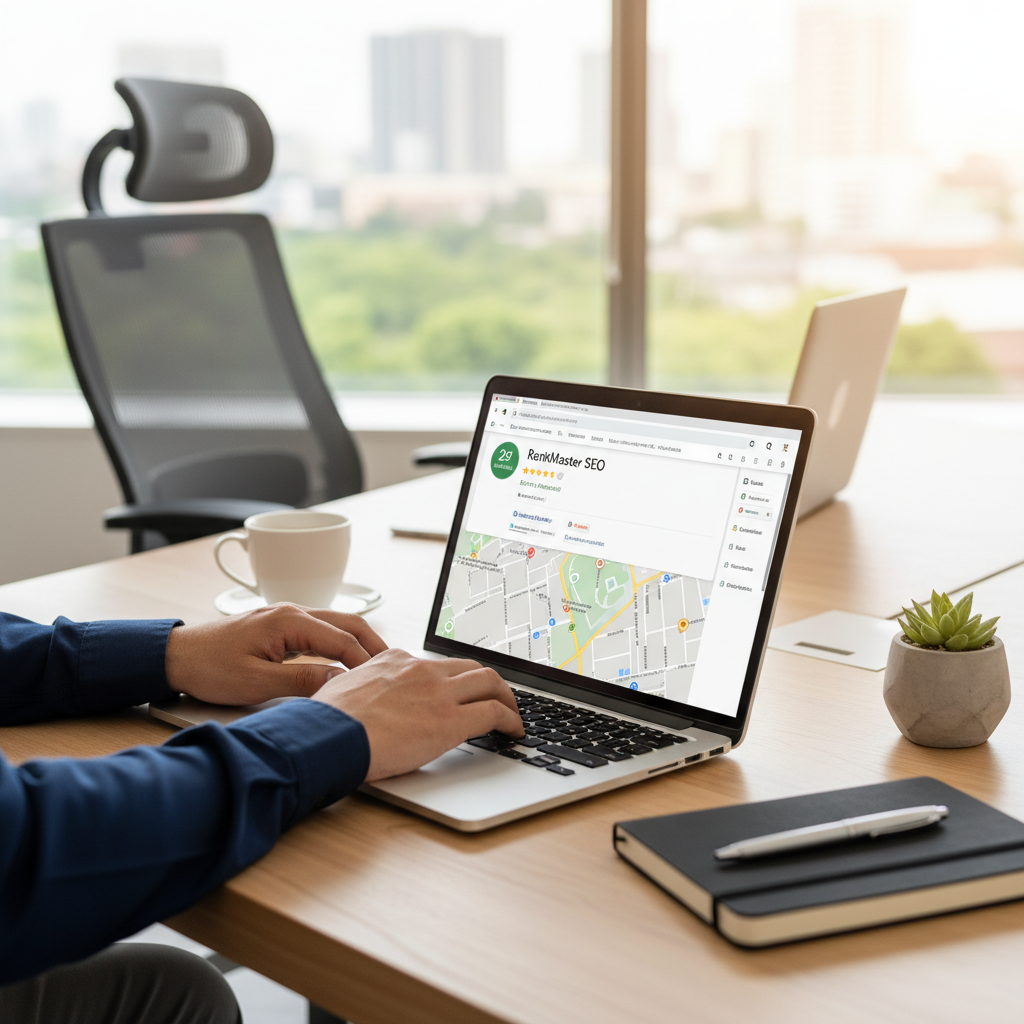
Stop Losing Local Phone Calls To Inferior Competitors
Dominate Local Search and Google Maps Rankings
If your business is not in the top 3 spots on Google Maps, you are invisible to 78% of local searchers. We audit your Google Business Profile, fix proximity issues, and push your listing into the Local Pack.
400+
GBP Listings Ranked
We have pushed over 400 local businesses into the top 3 map spots since 2018.
68%
Average 90-Day Call Growth
Clients see a direct spike in inbound phone calls within the first three months of optimization.
100%
Manual Profile Audits
Every citation check and competitor analysis is done by a human local SEO specialist.
How We Push Your Listing Into The 3-Pack
1
Run A Baseline Geo-Grid Scan
We map exactly where you rank across a 5-mile radius for your primary keywords. You see exactly which neighborhoods your competitors are stealing from you.
2
Execute A Deep GBP Audit
We strip your profile down to the studs to fix category errors, NAP inconsistencies, and missing entity attributes. We also report spam listings that are artificially pushing you down.
3
Build Local Authority
We establish hyper-local citations, optimize your weekly photo uploads, and implement a review generation protocol. This signals to Google that your business is the most relevant answer in your service area.
Google Maps Optimization Services

🔍 Google Business Profile Audits
We uncover the technical errors keeping your profile stuck on page 2 of Maps. This includes checking primary categories, service areas, and hidden penalties.
🗑️ Spam Eradication
Fake listings push legitimate businesses out of the Local Pack. We manually report and remove keyword-stuffed competitor profiles from your local grid.
📇 Citation Building & Cleanup
Inconsistent Name, Address, and Phone (NAP) data destroys local trust. We manually audit data aggregators and correct your business info across the top 50 local directories.
🗺️ Geo-Grid Rank Tracking
Stop guessing where you rank. We provide monthly heatmaps showing exactly how your visibility is expanding block by block across your city.
📸 GBP Post & Photo Management
Stale profiles lose rankings. We upload optimized, geo-tagged photos and publish weekly updates to keep your entity active in Google’s eyes.
⭐ Review Velocity Campaigns
A sudden spike in reviews looks unnatural to Google. We implement a steady, automated SMS and email system to generate consistent 5-star reviews from real customers.
Map Pack Rankings We Have Engineered

HVAC Contractor, Phoenix AZ
Before: Stuck at position 12 for AC repair in a highly saturated 10-mile radius.
After: Secured the number 2 spot in the Local Pack, generating 42 additional inbound calls per month.
⏱ 120 days
Personal Injury Lawyer, Chicago IL
Before: Invisible outside of a 1-mile radius from their physical office location.
After: Expanded 3-pack visibility to a 6-mile radius, resulting in an 85% increase in driving directions requests.
⏱ 6 months
Emergency Plumber, Austin TX
Before: Profile suspended due to a virtual office address violation.
After: Reinstated the profile within 14 days and climbed back to position 1 for emergency plumber near me.
⏱ 45 days
We Only Do Local SEO. We Only Rank Maps.
Most digital marketing agencies treat Google Maps as an afterthought. They sell you a generic SEO package, write a few blog posts, and hope your Google Business Profile magically climbs the ranks. That does not work when you are competing against hungry local businesses fighting for the exact same 3 spots.
We built GMB 2 Rank because we saw too many legitimate contractors, dentists, and lawyers losing hundreds of thousands of dollars to competitors who simply knew how to manipulate the map pack. We spent the last seven years reverse-engineering the local algorithm, testing exactly what moves the needle in highly competitive markets.
We do not guess. We rely on hard data from geo-grid tracking and manual competitor analysis. If a competitor outranks you, we look at their review velocity, their primary and secondary categories, their citation consistency, and the exact coordinates of their verified address. Then, we build a campaign to beat them.
You will not get automated, white-label reports from us. You get direct communication, transparent rank tracking, and a singular focus on driving local phone calls to your business. If you want to dominate your local service area, you are in the right place.
Frequently Asked Questions
How long does it take to get into the Google 3-Pack?
If your profile is already established but stuck at positions 4 through 8, we typically see movement into the top 3 within 60 to 90 days. Brand new profiles or highly competitive niches like personal injury law require 4 to 6 months of consistent entity building.
Do you guarantee a number one ranking on Google Maps?
No one can guarantee a permanent number one spot due to proximity factors and Google’s constant algorithm updates. We guarantee a mathematically sound optimization process that has consistently pushed our clients into the top 3 spots across their target service areas.
My Google Business Profile was suspended. Can you fix it?
Yes. We handle reinstatement requests for hard and soft suspensions. We audit your profile against Google’s current guidelines, remove the offending violations, and submit the proper documentation to get your listing live again.
What is a geo-grid scan and why do I need it?
A geo-grid scan drops a grid over your city and checks your exact map ranking at each specific node, usually spaced a mile apart. It proves exactly where you are visible and where you are losing leads, rather than relying on a single, inaccurate search from your office computer.
Stop Handing Local Leads To Your Competitors
Claim your top spot in the Local Pack before another business locks down your neighborhood. Let us run a baseline scan to show you exactly where you stand.
Written & Reviewed By
Duke Isaac Genon
Local SEO Expert
Duke Isaac Genon is a seasoned Local SEO Expert who specializes in enhancing the digital footprint of businesses through advanced Google Business Profile strategies and citation management. With a proven track record of managing high-quality USA citations for a diverse range of clients, Duke has established himself as a reliable authority in the gmb2rank.com niche. His expertise lies in navigating the complexities of local algorithms to ensure that businesses not only appear in search results but stand out as authoritative leaders in their respective markets. Throughout his professional career, Duke has demonstrated a commitment to excellence, collaborating within expert teams to deliver precise SEO solutions that cater to the unique needs of local enterprises. His deep knowledge of the local search landscape allows him to provide actionable insights that help business owners bridge the gap between their services and their target local audience. Duke is recognized for his data-driven approach and his ability to adapt to the ever-evolving standards of search engine optimization. He is deeply passionate about empowering business owners to achieve sustainable growth and visibility in an increasingly competitive digital world.
Latest from Our Blog

Why your citation cleanup project didn’t move the needle
I smell the sharp, artificial scent of laundry detergent every time I sit down to audit a local profile. It…

The hidden danger of using virtual offices for local search
Why virtual office addresses act as a proximity landmine for local businesses I spent three months fighting a hard suspension…
The specific review frequency that keeps you in the 3-pack
A local cafe owner called me at midnight because a competitor had dropped twenty 1-star reviews in an hour using…