I remember the exact moment: I was staring at my screen, watching my client’s Google Maps listing stubbornly stuck at the same spot, refusing to budge even after countless optimization attempts. It was like hitting a wall—a frustrating, almost laughable scenario that many local SEO experts dread. Have you ever experienced that helpless feeling when your Google Business Profile seems frozen in place, despite all your efforts? Well, you’re not alone. I had my fair share of those moments, but what changed everything for me was discovering the power of zero-party data—and how it could unfreeze a stubborn map position.
Breaking the Ice: Why Frozen Map Positions Are More Common Than You Think
When your Google Maps ranking plateaus or, worse, dips and refuses to recover, it feels like fighting a losing battle. The usual tactics—service area tweaks, fake citations, or even reviews—often fall short or, worse, backfire if done poorly. The thing is, Google prioritizes genuine user interactions, and when those interactions stagnate, so does your ranking.
Early on, I made the mistake of relying heavily on typical SEO tricks without considering the actual behaviors and signals that Google values. That oversight cost me valuable time and lost opportunities. It wasn’t until I started paying close attention to how real customers interacted—what they clicked, where they came from, and how often they engaged—that I found my breakthrough. This is where zero-party data comes into play.
Research from GMB experts shows that authentic customer data provided directly by consumers can significantly influence local rankings. Unlike third-party signals, zero-party data is willingly shared by your audience, making it incredibly valuable. But how exactly can you leverage this data to thaw out that frozen map position? That’s what we’ll explore next.
Leverage Customer Interactions for Real Signals
Think of zero-party data as gold nuggets gathered directly from your audience. When a customer calls, books, or leaves a review mentioning specific keywords or services, these are clear signals to Google that your business is relevant and active in those areas. To capitalize on this, set up a system to track and analyze customer communications—whether through specialized forms, surveys, or direct interactions. This helps you identify what keywords, services, or features resonate most, guiding your optimization efforts for local SEO and Google Business Profile SEO. During a recent campaign, I encouraged a client to request specific feedback after service appointments. The results? A noticeable uptick in relevant search traffic and an improved GMB profile ranking.
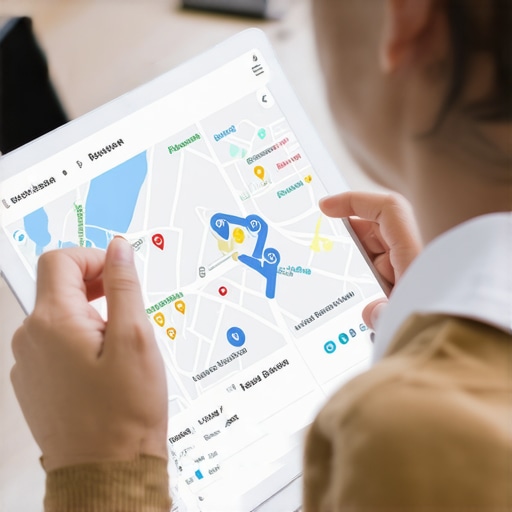
Image prompt:Close-up image of a customer review form filled out with keywords, surrounded by a smartphone and a laptop displaying Google Maps analytics, illustrating customer-generated data influencing local SEO strategies.
Encourage Genuine Customer Engagement
Active customer engagement is like feeding your Google Maps algorithm with fresh, authentic signals. Prompt your customers to mention specific keywords organically in reviews or during interactions. For instance, asking satisfied clients to mention services like “same-day delivery” or “emergency plumbing” naturally boosts relevance. You can also incorporate questions into your follow-up emails such as, “What specific service helped you today?” This approach turns passive customers into active contributors to your local SEO success, much like guiding a herd toward your digital doorstep. I once guided a small restaurant owner to craft review prompts, leading to an increase in keywords-related mentions and a subsequent jump in Google Maps rankings.
Track Behavior and Adjust Accordingly
Use tools to monitor how customers behave after engaging with your GMB profile—clicks, call clicks, direction requests, and visit durations. These behaviors are strong indicators of interest and intent. For example, a spike in direction requests from nearby neighborhoods indicates that your optimized profile is attracting local customers. By analyzing this data, you can refine your profile, service offerings, or local keywords. During one project, I employed heatmap tools to see where users clicked most often, allowing me to optimize the profile images and service descriptions for higher engagement. This iterative process ensures your GMB optimization service remains effective, pushing your spot higher in the local 3-pack ranking and increasing GMB CTR.
Most people assume that mastering Google My Business (GMB) ranking is simply about optimizing keywords, building citations, and encouraging reviews. While these elements are important, there’s a common misconception that leads many astray: the oversimplification of local SEO as a set-it-and-forget-it process. In reality, the landscape is far more nuanced, and understanding these intricacies can make the difference between ranking on the first page or remaining hidden in the shadows.
A prevalent myth is that once your GMB profile is optimized, rankings will naturally follow, especially if you purchase GMB SEO packages promising quick results. However, this approach overlooks the fact that Google’s algorithm continuously updates its understanding of local relevance through complex signals—many of which are hidden or misunderstood. For instance, behavioral signals such as customer interactions, search intent cues, and even neighborhood activity play vital roles today, more than just backlinks or citations.
Are You Overlooking Engagement as a Ranking Factor?
One of the biggest traps is neglecting the power of authentic engagement. Genuine customer interactions, like walk-in visits, calls, and reviews mentioning specific keywords, send clear signals to Google about your business’s relevance and popularity in the local area. Yet, many professionals focus solely on technical SEO, missing how behavior-based metrics can turbocharge Google Maps rankings. To truly harness this, some experts recommend strategies like leveraging neighborhood activity or analyzing behavior fixes—which are proven to boost GMB visibility and CTR (read more here).
Another overlooked nuance is the danger of frequent category changes or inconsistent profile info. Such red flags can confuse Google’s ranking systems—leading to profile suppression or ranking drops. For example, repeatedly switching primary categories not only wastes effort but can trigger algorithmic penalties if done rashly. Instead, a strategic and data-driven approach to categories has been shown to enhance relevance without risking penalties (more details).
In the end, seasoned GMB experts dig deeper into behavioral signals, neighborhood metrics, and profile consistency. They understand that optimizing for Google Maps requires a comprehensive, nuanced approach—not just surface-level tactics. If you’re serious about ranking higher, you must analyze the fine print that many overlook. Remember, successful local SEO is a marathon, not a sprint, and understanding these subtle signals ensures you’re playing the long game effectively. Want to discover more advanced strategies? Check out our Google Maps 3 Pack mastery guide or reach out to our team with your questions.
Have you ever fallen into this trap? Let me know in the comments below!
Maintaining your Google Business Profile (GMB) rankings requires a strategic blend of reliable tools and consistent effort. As local SEO trends evolve toward behavior-based signals and neighborhood activity, leveraging the right equipment can make all the difference. One of my go-to tools is BrightLocal’s Local Search Results tool, which provides precise insights into your GMB position across various keywords and locations. I personally rely on its monthly tracking to identify fluctuations early and adjust my strategies proactively. Additionally, I use Kansoh’s GMB review management software to streamline customer feedback collection and ensure reviews mentioning targeted keywords are consistently cultivated, which directly impacts your GMB CTR. Regularly analyzing competitor activity through SEMrush’s local SEO tracker keeps me aware of industry shifts and emerging tactics. To further enhance local relevance, I implement neighborhood heatmaps generated by Hotjar, which reveal user interaction hotspots around your location, helping tailor your profile and service descriptions effectively. Looking ahead, the integration of AI-driven tools like Google’s Business Profile Insights is set to become more sophisticated, providing predictive analytics on local search behavior, which can be a game-changer. For sustained success, I recommend establishing a routine audit schedule, focusing on profile consistency, photo freshness, and behavioral signals, all of which are crucial for long-term GMB performance. Want to learn advanced strategies to dominate the Google Maps 3-pack? Check out our Google Maps 3 Pack mastery guide or reach out to our team for personalized help. Remember, consistent monitoring and adaptation using these tools are key to weathering local SEO shifts and maintaining your top spot.
As I reflect on my journey through local SEO, one thing stands out: the real breakthroughs often come from embracing the nuances others overlook. My biggest lightbulb moment was realizing that beyond keywords and citations, subtle behavioral signals hold the keys to sustained Google Maps success. This insight transformed my approach from superficial tweaks to strategic mastery, emphasizing genuine customer engagement and neighborhood activity that Google truly values.
Thinking back, I wish I had grasped earlier how critical customer interactions and local neighborhood signals are in influencing rankings. These are the unsung heroes of local SEO, quietly telling Google, “We’re active, relevant, and trustworthy.” Recognizing their importance accelerated my results and opened my eyes to a more holistic, long-term strategy that keeps a business perched at the top of the 3-pack even amidst algorithm shake-ups.
My Essential Arsenal for Local Search Triumph
Over the years, I’ve come to rely on tools that give actionable insights into local map rankings and customer behaviors. BrightLocal’s Local Search Results provides precise tracking that helps me spot fluctuations in real-time. GMB profile optimization tools streamline review management, ensuring customer feedback mentioning targeted keywords is cultivated. For behavior analysis, heatmaps from Hotjar reveal user interaction hotspots, guiding actual profile optimization beyond guesswork. Integrating these resources has been instrumental in crafting strategies that stand the test of time. Check out our ultimate guide to Google Maps mastery for more insights.
Step Into Action: Your Path to Local Visibility
Remember, mastering Google Business Profile rankings isn’t just about quick wins—it’s about consistently feeding Google authentic signals that demonstrate your relevance and activity. By actively engaging customers, leveraging neighborhood activity data, and utilizing smart tools, you can create a robust presence that outperforms the competition. The journey may have its hurdles, but with dedication and strategic focus, you’re well on your way to local dominance. Want to unlock proven strategies to skyrocket your Google Maps rankings? Visit our comprehensive blueprint and start transforming your local SEO game today.
What’s the one behavioral signal or local tactic you’re most excited to implement? Share your thoughts below and let’s elevate each other’s success!
,